The pursuit of happiness

11 10 2010

I’m currently in the middle of Elizabeth Gilbert’s new book “Committed”. You know the name – Gilbert is the author of that blockbuster of self-reflection: “Eat, Pray, Love” (now a major motion picture).


The Book.


If you are one of the three people on the planet who have managed to escape the EPL hype so far, the story is this: After a messy and very distressing divorce, Gilbert found peace in Italy – where she ate, India – where she prayed, and Indonesia – where she loved. (FYI, the movie’s OK but the book was better.)

“Committed” is an intellectual examination of the institution of marriage, and Gilbert lists the many reasons she never wanted to go near it again. Bad luck for her, the U.S. government intervened, basically damning her to wed her foreign lover, even though both were aghast at the idea. Initially, anyway.

It’s easy enough reading, and I’m entertained. Light vignettes, good storytelling, interesting facts about something that I never bothered to research the history of. I’m only about halfway through, so please nobody tell me how it turns out… I’d like to read for myself. (I assume she and Felipe get married in the end, but I’d like to know how they found their way there.)

In 2007, even though R. had already asked me to marry him (on a cloudy New York afternoon, at the bar in the Boathouse restaurant in Central Park), we never really seriously discussed it in detail. We were both modern, enlightened 21st century adults who didn’t need a piece of paper to certify our relationship. Kids weren’t on the horizon (“Are you getting married because you’re pregnant?” is a really rude first question, by the way – and you’d be amazed how many people ask precisely that question), neither of us needed a visa for the other’s home country (yet) and I wasn’t looking for a new identity that would come with a new name (I wasn’t running from the mafia or the law). So to us, there was no real requirement for it.

Until my father fell suddenly and seriously ill. On what turned out to be his deathbed, R. asked him for his permission to marry me. You know, the old fashioned way.

So, well, we did. And today happens to be our second wedding anniversary.

On October 11th, 2008, this is what we asked of and pledged to each other:

Please join me on a journey of discovery, adventure and celebration, so that together we may face whatever this life will bring us, as friends, partners and lovers. I promise to encourage you, inspire you, support you, comfort you, and respect you as an equal, in good days and in bad. I promise to give you the best I have to offer. I will hold you close, and remain faithful to you, for all the days to come.

It’s been two years since that glorious indian summer afternoon when R. and I officially legalized our love before God and the Commonwealth of Virginia, as well as friends and family, some of whom had flown in from halfway around the world to watch and to party with us. And it was absolutely fabulous.
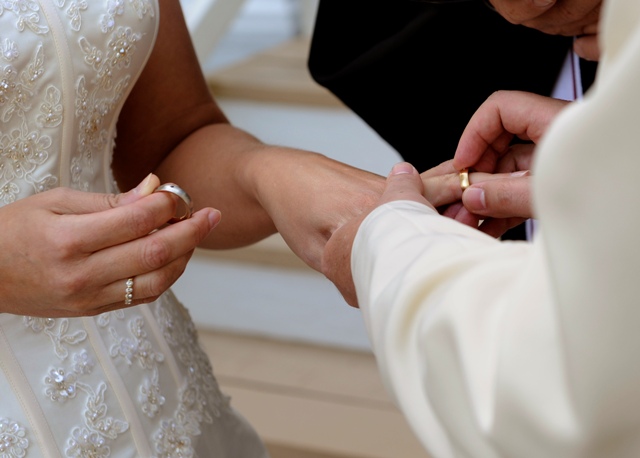
 

The moment of truth on October 11th, 2008.


More fabulous yet is the everyday of being together. Our friendship and respect for each other has shifted, changed and grown and two years on our relationship is stronger than ever. We are definitely having way more fun together the longer we hang out with each other.

I finally feel like I belong somewhere. To someone. Who always welcomes me home.


Anyone’s Adventure

7 10 2010

There we were on a summer afternoon, an odd couple if there ever was one. Me, the pilot, in shorts and a t-shirt, riding left seat as usual, hands on the controls and concentrating on my cockpit. Snugly nestled into the seat at my right, my first-time passenger, in high-heeled wedge sandals and designer fashion, skeptically eyeing the dials on the instrument panel in front of her. On this day, she was a kind of virgin of the sky, on her first true aviation adventure.

I like taking up first-timers in light aircraft. Especially the veteran air travelers who have often used large airplanes to get from A to B, but never imagined doing this kind of thing for fun. These folks spend their lives at the back of the bus: herded like cattle from one terminal to the next, into long steel transportation tubes, the age of elegance in air travel long gone with the wind. (Unless you fly First Class on Emirates’ new A380. Which no normal person can afford anyway.)

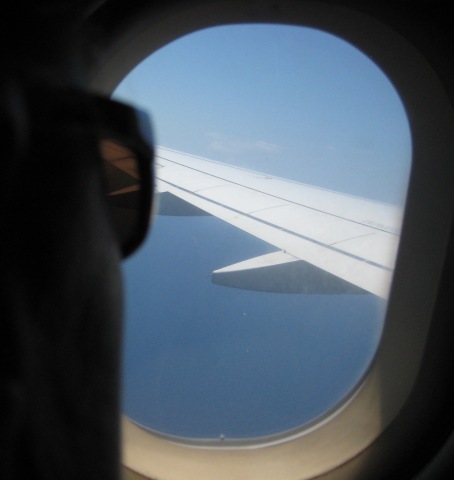
They all have a decidedly lateral perspective on aviation.


Their view.


When they take a seat up front for the first time they gasp at the possibilities that unfold before them. Suddenly seeing the world out of the wide front windshield rather than out a porthole on the side is an entirely new experience that leaves many speechless. Due to anguish or excitement, I haven’t yet figured out.


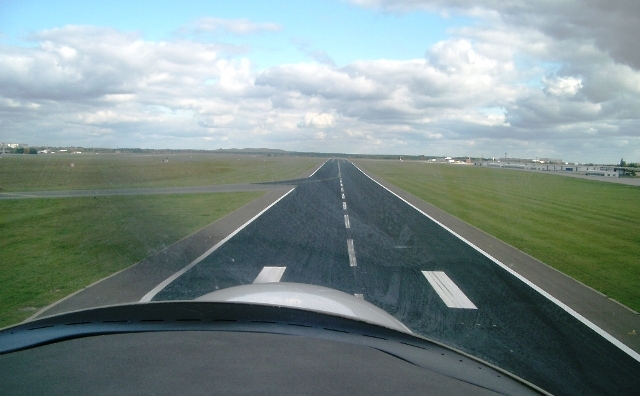
My view.


In the past, the most complex tasks they had when flying were 1) to decide what they wanted for lunch and 2) figure out the entertainment system. (OK, that’s pretty complex…) When I give them the chance to drive the plane for a little while, they hang on to the yoke with a death grip. It’s funny – a few of them are naturals at flying straight and level. And others are hopeless. There is no in-between.

A first-timer asks fresh questions like: “Why does it feel like we are going so slow?” (As a tailwind propels us and the airspeed indicator shows a whopping 120 knots or 210 km/h.) Or they comment on things about which I have become blasé. “I’ve never seen the world like this before,” they say in awe as we cruise over landmarks they know only from the horizontal.

Those moments remind me how privileged I am.

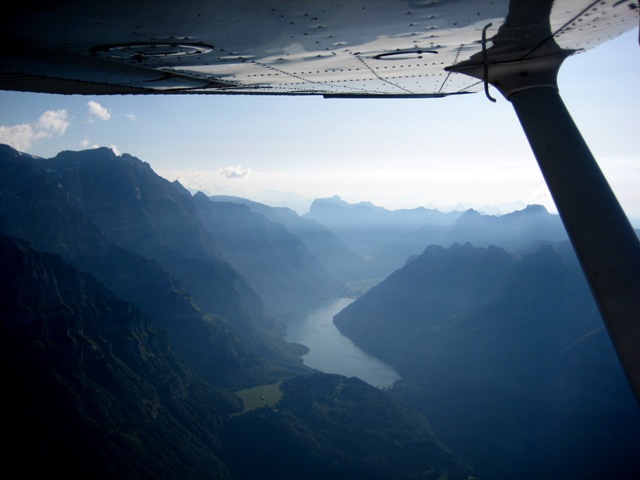
Mountains are the great attraction of flying in Switzerland. I did my training in a region where the highest peak was maybe 1,500 feet (450 meters) above sea level. You could see the weather come for miles, and the words “downdraft,” “density altitude” and “paraglider” belonged to a foreign language. Exploring the Alps from above brought a new, thrilling dimension to my hobby, along with about a million more things to think about when at the controls of a single-engine piston aircraft.


Our view.


Even when earthbound, my thoughts are often airborne. Whenever my brain registers the hum of an engine overhead, I am programmed to look up. I always wonder what the view is like today from that cockpit. How are the weather conditions? Where is the pilot going and where did she come from? Is she up with first-timers? Or alone for a personal spin? Distancing herself from a worry, and trying to find a solution?

The fog that descends on Zurich for much of the autumn will probably keep me grounded for the next few weeks, but I look forward to taking off on a crisp, clear, sunny winter day when everything sparkles – the snow, the air outside the cockpit and my breath. And maybe I can convince another first-timer to come with me on a fairy-tale adventure like that, so that s/he can discover that other-worldly feeling of true freedom.


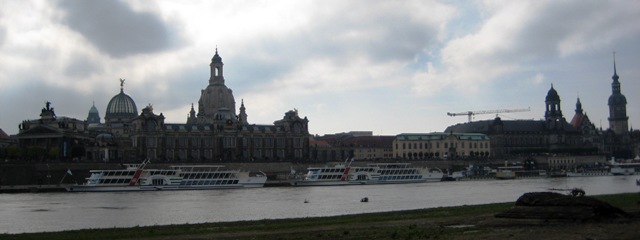
Dresden, Germany, October 3rd, 2010

4 10 2010

We walk along the north shore of the Elbe River in the afternoon. It is overcast, the leaves are starting to turn and the cold wind signals autumn has arrived. A recent flood has left debris on the shoreline and the sounds of a street festival echo in the distance. We look south, beyond the swift but receding current, at the restored old sandstone city. Transformed from a scarred and neglected victim of war just a generation ago, it now glows in a brilliant new light, fresh colors and newborn hope.

21 years ago, my friend and her city tasted freedom for the first time. A cold war kid born on east side of the Iron Curtain, she and her family fought the totalitarian system as best they could for the place they were in. As practicing Christians and conscientious objectors, their feelings  toward the state alternated between ambivalence and downright antagonism, which caused moments of anguish and years of struggle. But as she says today, it was the only right thing to do. And so they did it.

The secret police apparatus that had permeated every corner of East German society dictated the course of their lives. Her father was recruited but refused to serve. Her mother’s letters to relatives in the West were intercepted. For political reasons, she and her sister were denied educations and careers they had dreamed of. They lived with a feeble hope that better days might come but also with a constant fear that their actions or their words or their neighbors would secretly betray them. She credits her family with giving her the backbone to stand up to injustice and her faith has made her an open, forgiving human being, without bitterness.

The whimpering demise of the regime in the autumn of 1989 and the birth of a united Germany eleven months later signaled to her that her opportunity had come, and that she was morally bound to seize it. After unification, she returned to her interrupted education, finished the qualification that would allow her to study, and went to university. For the very first time in her life, at 20, she could choose her own path and determine her own future. In this fresh new world, no party official had the power to tell her she was not allowed to.

Our friendship formed during that exhilarating, reckless time of fundamental change in East and West, and has lasted across the oceans and canyons of time.

In the almost seventeen years I have been coming here to visit her, buildings have been repaired, windows replaced, roofs newly shingled. Along the train tracks, pastel-colored villages now stand where that ubiquitous dismal brown-grey color of decay, so prevalent across the eastern Europe of our childhoods, used to be. The penetrating, acrid smell of burning lignite has disappeared.  Belching brick chimneys have made way for wind farms – their huge, slender blades now cut through the clean air in perfect synchrony.

For the most part, the wounds inflicted before and after the Berlin Wall fell have healed. But resentment and envy sometimes still cast dark shadows on the modern era.

Without slipping into trivial nostalgia, we agree as we walk along the river this chilly October afternoon that what happened twenty years ago is a miracle beyond words. We quietly celebrate that miracle today, together, on the twentieth anniversary of unification.

The local weekend newspaper’s front-page headline declares simply, “Congratulations Germany”.

Indeed.


Women Matter

1 10 2010

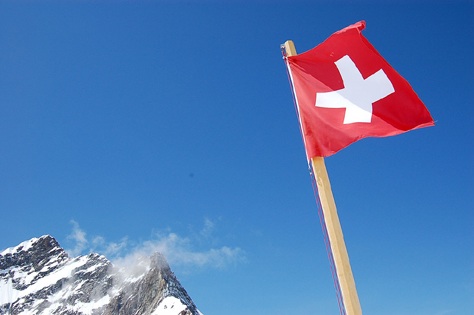
Last week, Switzerland’s parliament elected two new members of cabinet to replace two elder gentlemen who had recently stepped down. There is now a female majority in the seven-member cabinet – four women and three men.  This, just 39 years after national female suffrage was introduced, and just 20 years after the last Swiss canton finally allowed its women to vote in local elections (as a result of a Supreme Court case, against the will of the canton’s men).

It’s a bit distressing to know that I live in an industrialized, first-world country where women have had the right to vote for less time than I have been alive.

Last Wednesday, the parliament had the opportunity to elect a fifth woman to the cabinet instead of a man, but I guess that was a little too much of a good thing for the (male-dominated) legislative body.

It's hard work, climbing a mountain.

I grew up in a household where I was told that pretty much anything was possible. My parents did their best to open doors for me, sent me to top schools, and told me I could go out and be whatever I wanted to be. But amid all their motivation, when it came time to strike out on my own, they were surely silently aghast at (and hopefully a little proud of) some of the decisions I made. I became a journalist and went to dangerous places, I learned to fly small airplanes, I expressed no interest in having or being around children.

My fortune would be found on the road less traveled by, my career would certainly not follow a straight line – of that I was convinced. By no means a trailblazer, I just wanted to do something unusual with this life, and saw no reason to do what people expected of me. Or to worry about what the neighbors and relatives would think. One uncle declared me lesbian when, at 30, I still wasn’t married.

An international management consultancy recently published a series of studies on the effectiveness of women in upper echelons of management. The main conclusion: the more women in positions of responsibility, the better a company does financially. Why? Because female managers use a wider range of techniques to motivate employees (like “inspiration”), thus improving performance. Very, very simple concept, folks.

Yet women continue to remain outside the old boys clubs, noses pressed to the windows, looking in. In order to advance up the ladder in the workplace, women are required to display the same dysfunctional patterns of behavior and play the silly power-games that men have cultivated for years. They must take on a dress code and a language which is often all too foreign to them. Sometimes other women are our own worst enemies – mistakenly thinking there is room for just a very few of us at the top.

Will the female-majority cabinet in Switzerland make a difference in the everyday lives of women here? Probably not. Misogynic attitudes don’t change in an instant, and the everyday challenges women face will not disappear overnight. Government business will go on as it has always has – with the exception that cabinet meetings might be a little more colorful in the future.

But it’s nice to see that we are finally getting somewhere, ten years into the 21st century. And boys, don’t worry – when we women end up ruling the world we promise not to silence you. Unlike some of you, most of us believe gender diversity is a good thing.


Water, water everywhere.

27 09 2010

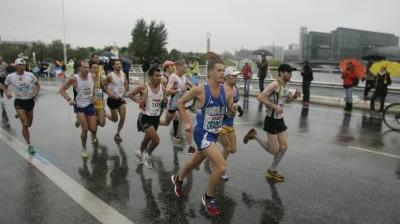
So it rained. And it rained. And then it rained some more. And then God said, “I don’t think they are wet enough down there in Berlin, so I will let it rain even more.” And it did. And after a day and a half of a nonstop downpour of varying intensity, a few of the 50,000 marathoners thought perhaps it might be time to buy a kayak.

The adverse weather conditions were the real story of this year’s Berlin Marathon. Cloudy but dry until two hours before the skaters started out on Saturday afternoon, the city was a lake by the time they finished.

Yours truly is not a wimp or a quitter, but she has great respect for the elements and the injuries wet streets can cause those underway on eight slick rubber wheels. Any fight you pick with asphalt, you will lose, guaranteed. Any fight you pick with wet asphalt, well, consider yourself a goner. So when it came time to make the big decision – to start or not to start – there really was only one sensible answer: Nope, uh-uh, no way José. Not today, my friends.

However, when it comes to marathons, common sense takes its leave. We all worked too hard and waited too long for this to just not show up on race day.

So here I was in the starting area along with 6,000 skater-colleagues, against better judgment, waiting for the gun. With the streets disguised as rivers, a personal best time was simply out of the question. The conditions demanded a careful, concentrated technique, not unlike walking on eggshells.

Us (skaters) in the rain.

About a third of the way into the race, my skates felt like sponges that had absorbed five extra kilos in water-weight. Each. That’s when the wind picked up and it really started raining.

The first 20 kilometers (13 miles) took me an hour, and just as I was doing the math for the rest of the race the asphalt jumped up to bite me – I lost my grip on a crooked tar seam and went flying.

A split-second later I slithered face-down along the wet, oil-slick streets. The only spectators for my belly-flop were an old guy out walking his dachshund and a few other skaters who swerved to avoid this picture of misery, thanking God it didn’t happen to them.

Sitting on my butt in the middle of the roadway, I checked to see if all body parts were still intact. One knee hurt like I had cracked a kneecap, and I felt a tingling sensation on an elbow. The five-inch bloody gash was kinda gross, but harmless, and for some reason I felt no pain there. I gingerly got up and flicked two dead leaves off the front of my blue-and-pink spandex suit. The white layer of skin I left on the street soon dissolved in the rain. Already soaked through to my underwear from water coming from the sky, I had now also bathed in water on the ground.

Regaining my stride and once again picking up good speed, I skated over the half-marathon mats and a mantra formed on my lips. I shouted out: “You will not get me, you lousy, wretched, flooded streets!! YOU WILL NOT GET ME!”

Fellow skaters glanced over in horror and distanced themselves from this obviously distraught maniac. By kilometer 32 (only 10 more to go – this is way too easy!!!)  I was grinning like I’d escaped from the funny farm. Shortly thereafter, skidding around a corner, I hit the deck again, this time a little harder, with an audience of a few hundred. Dignity, au revior! But what the hell. No one gives up four kilometers from the finish line.

Don’t ask me who won, or in what time, I have no idea. And because I freed myself of the pressure to clock a personal best, I enjoyed every one of those 42,195 meters in the driving rain. It was simply lovely – a confirmation of why I do this. An added bonus: I felt great and barely broke a sweat. Even though I was longer in transit than ever before (more than two hours) it felt like a Sunday walk in the park. It was a chance to believe in myself again.

And yes, you guessed it. The wounds will heal and there is always a next year, too. I will certainly be back for more.

Them (runners) in the rain.